
After the Dream: Returning to Japan With Clearer Eyes

Ōtemachi Station, Tokyo, Japan, Year: 2025, Photographer: Ajani Charles
Approximately a 17-minute read.
Outline
Returning to Japan With Clearer Eyes
Gardens, Museums, and a Larger Japan
Order, Escape, and the Cost of Excellence
Building a Life, Not Taking a Trip
Returning to Japan With Clearer Eyes
I think about Japan multiple times per day. I often remind myself that it is a truly rare, remarkable, highly influential, complicated, and inspiring country, and like all countries, it has flaws, tensions, and contradictions of all kinds.
My first trip to Japan was extraordinarily revealing, as I have previously written and spoken about. Japan is remarkable; Its artistic, spiritual, and emotional impact undoubtedly changed the course of my life, career, and consciousness for the better. Still, genuine love for a country should never undermine critical thought or a nuanced view of a country.
I have slowly and painfully continued learning how to speak, understand, read, and write Japanese. My progress has been slow, and my progress can only accelerate through what helped me most last summer: spending substantial time with like-minded Japanese people who are willing to correct me, explain cultural subtleties, and communicate patiently across the language barrier. I continue studying Japanese history, as I have in different forms since high school, especially the Second World War and Feudal Japan, which have fascinated me since the ninth grade.
I am as interested in Japan’s present and future as I am in its rich, profound, beautiful, and frequently violent past. I have continued building relationships with kind and talented Japanese artists, entrepreneurs, executives, musicians, photographers, filmmakers, and cultural figures whose perspectives are helping me understand the country beyond the limited viewpoint of a foreign visitor. I have been extremely fortunate.
Slightly more than a year ago, I landed at Narita International Airport on Canada Day, July 1, 2025, with almost no Japanese ability, no established business leads, and no local network, which meant that I had little choice but to introduce myself to as many potential friends, colleagues, and collaborators as possible or risk isolation and disillusionment in a country I had dreamed of visiting for decades.
Those introductions required courage, open-mindedness, social intelligence, intuition, humility, and a willingness to endure rejection or embarrassment. Still, because I took those chances, I had the best trip of my life last summer. I returned to Canada with new friendships, collaborators, business possibilities, photographs, films, spiritual clarity, and the conviction that Tokyo had become my favourite city in the world. Courage preceded connection, and connection eventually produced certainty.

Hostess: Izumi Mudhia, Location: 1 OAK Tokyo, Tokyo, Japan, Year: 2025, Photographer: Ajani Charles
What affected me most was not limited to Japan’s spectacular attractions, because what I briefly experienced as ordinary life in Japan, and especially throughout Tokyo, from the konbinis, taxis, subway platforms, Shinkansen stations, vending machines, cafés, hotel lobbies, and narrow side streets to the orderly movement of people through Shibuya, Akasaka, Shinjuku, and Ginza, was remarkably peaceful, safe, charming, convenient, visually harmonious, and thoughtfully managed.
Gardens, Museums, and a Larger Japan
Exploring Tokyu Plaza and its surroundings allowed me to witness Tokyo’s fusion of fashion, architecture, commerce, design, and youth culture in concentrated form, as the neighbouring streets, shopping districts, intersections, rooftops, escalators, terraces, and elevated public spaces seemed designed not merely to move people from point A to point B, but to continuously stimulate observation and transform an ordinary reflective wall, storefront, alley, pedestrian bridge, or crowd into a potential photograph or film scene.
The National Art Center, Tokyo, offered a complementary form of visual stimulation through a calligraphy exhibition that demonstrated how strict discipline and individual expression can coexist. Japanese calligraphy is so beautiful, and every stroke emerges from an established tradition, while each artist’s relationship to movement, pressure, spacing, rhythm, and emptiness remains personal. I found the exhibit to be incredibly calming.
At the museum’s café, I left thousands of dollars' worth of photography and filmmaking equipment unattended on a table for approximately fifteen minutes, something I would never do in Toronto, Vancouver, New York City, Los Angeles, London, or most other large Western cities. I suspected that I could have left the equipment there much longer, probably for hours, before someone responsibly delivered it to the museum staff or police, which captured something essential about Japan: its beauty is not only visual but behavioural.
I also greatly enjoyed the Tokyo Metropolitan Teien Art Museum, where the former residence of Prince Asaka, its European-influenced Art Deco interiors, René Lalique glasswork, modern annex, surrounding lawns, pond, miniature hills, and Japanese garden demonstrated that Japanese identity has never been culturally pure, static, or completely isolated but has repeatedly absorbed foreign ideas, technologies, religions, and artistic movements before transforming them into something recognizably Japanese. The museum is truly a beautiful time capsule that represents how Japan has transformed Western inventions and perspectives.
Kyu-Shiba-rikyū Gardens became one of my favourite places to meditate, as its sculpted trees, stones, bridges, hills, and water formed a miniature landscape surrounded by contemporary office towers and dense infrastructure. I was surprised by how few people were there on the weekday I visited, which may have reflected the demanding working lives of Tokyo residents who live near extraordinary gardens yet lack the time or energy to enjoy them regularly.
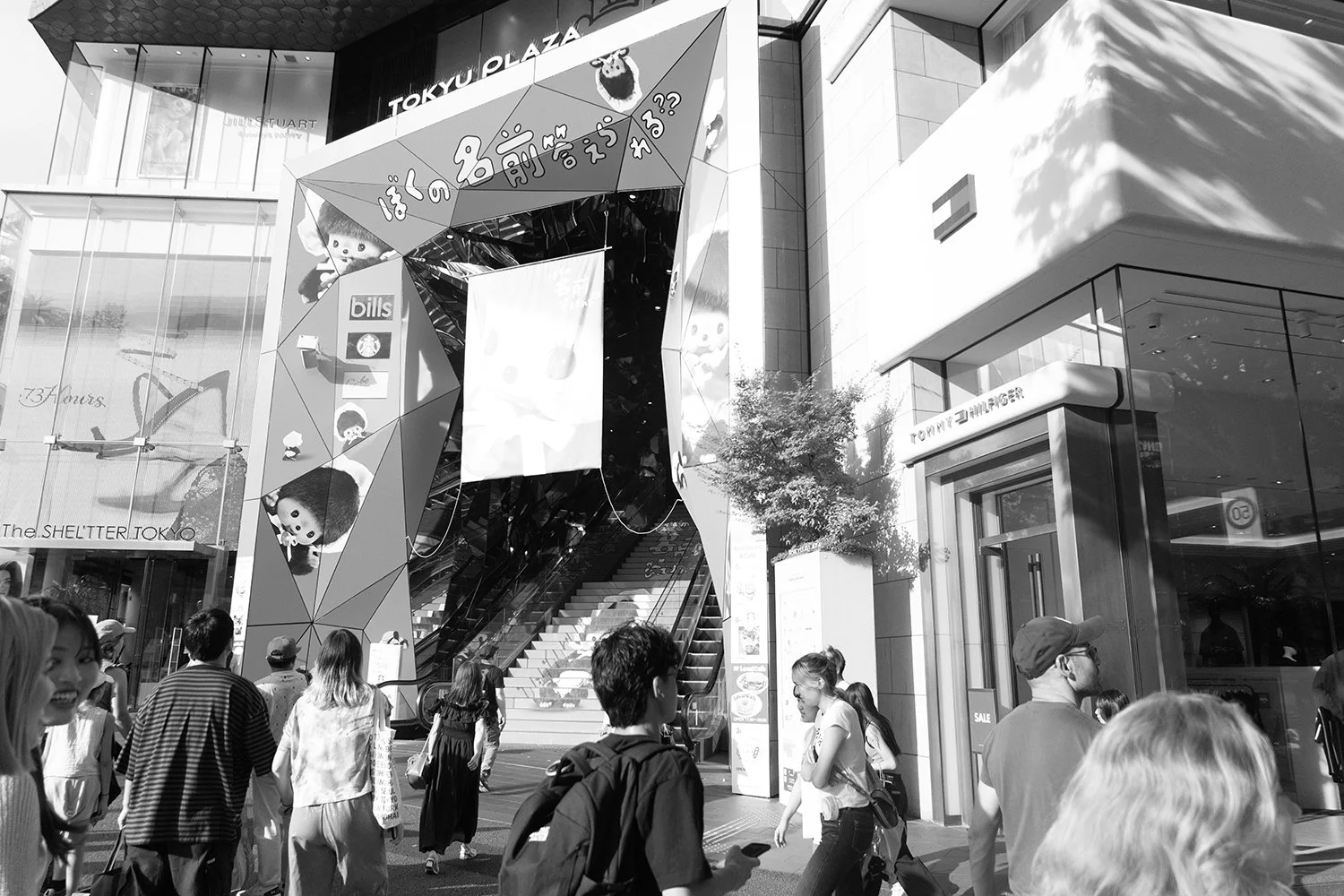
Location: Tokyu Plaza, Tokyo, Japan, Year: 2025, Photographer: Ajani Charles
Shinjuku Gyoen National Garden, with some of the most immaculate lawns I have seen in my life, its enormous trees, historic structures, contrasting Japanese, English, and French garden traditions, and its beautiful greenhouse, joined Hama-rikyū Gardens, the Nezu Museum garden, Meiji Shrine, Hie Shrine, and Yoyogi Park in demonstrating how Tokyo preserves, frames, and carefully maintains nature as an essential counterweight to commerce, density, and work. Tokyo has more amazing green spaces than I assumed it would over a year ago.
Order, Escape, and the Cost of Excellence
Last summer, Tokyo was my primary base; however, my journey through Osaka and Kyoto reminded me that Japan cannot be understood exclusively through its current capital, because Osaka’s personality felt more direct, relaxed, and spontaneous than Tokyo's, and its architecture reminded me of Toronto. On a related note, part of the Japanese government is now considering making Osaka its second capital in case a major earthquake incapacitates Tokyo.
The view from the Kuchu Teien Observatory at the Umeda Sky Building in Osaka revealed another enormous Japanese urban system with its own rhythms, personality, and architectural identity.
I also unexpectedly met a retired sumo wrestler named Yoshinori Tashiro at the Umeda Sky Building and Kuchu Teien Observatory, which offered beautiful views of Japan’s second-largest city; an encounter that immediately embodied the scale, discipline, history, and physical presence associated with Japan’s national sport. He told me that he appeared in John Wick: Chapter 4; his English-speaking skills were excellent, which is rare in Japan. At the Osaka Museum of History, I learned an enormous amount about the city’s development across different eras and its political, commercial, architectural, and cultural importance. At the same time, the museum’s elevated exhibitions offered expansive views towards Osaka Castle, which I also visited, and connected the city’s reconstructed past to the contemporary landscape surrounding it.
I visited a few nightclubs in Osaka during my first trip to Japan, within hours of arriving via the shinkansen. Unfortunately, it was the middle of the week; they were mostly empty because of my poor timing, which has left me eager to return on busier nights, meet more local DJs and artists, and document the city’s nightlife with the preparation and attention it deserves.
My exploration of Kyoto was compressed into approximately eight hours, much of it on foot after several hours of train travel, but the climb through the seemingly endless vermilion torii gates of Fushimi Inari Taisha, followed by approximately half an hour of solitary meditation in a space near the top, became one of the most spiritually significant experiences of my life and left me determined to return to Kyoto sooner rather than later.

Actor, Former Athlete: Yoshinori Tashiro, Location: Umeda Sky Building, Osaka, Japan, Year: 2025, Photographer: Ajani Charles
Japan is an advanced civilization constructed along one of the most geologically unstable regions in the world, where earthquakes, tsunamis, volcanoes, typhoons, flooding, and landslides are recurring realities rather than distant abstractions, and the anticipated Nankai Trough megaquake is an especially disturbing risk that anyone considering a long-term life in the country must take seriously. I believe Japan’s earthquake-resistant engineering, preparedness systems, evacuation procedures, warning networks, punctual transportation, behavioural restraint, immaculate public spaces, and rituals of collective consideration exist in part because disorder carries enormous consequences in a densely populated country.
Japanese society is optimized for dealing with mass emergencies; Japanese order seems to be a natural reaction to the region's geological chaos, and experiencing a major earthquake in Japan remains one of my greatest fears.
Building a Life, Not Taking a Trip
The same order that protects and comforts people can also become restrictive, which has helped me better understand why some Japanese people leave Japan for comparatively chaotic, unequal, or unsafe societies that may nevertheless provide greater earning potential, professional mobility, direct communication, experimentation, and freedom from rigid expectations. Over a year ago, I could not understand why a Japanese person would ever emigrate from Japan, given Japan’s many upsides, but now I do; the challenges of conforming to Japan’s societal expectations can be brutal.
The popularity of pachinko, government lotteries, designated sports betting, nightlife, karaoke, hostess clubs, and excessive drinking must also be understood within this context; such activities can provide stimulation, repetition, risk, emotional release, numbing, and the possibility of temporary transformation in a society where containment, conformity, politeness, and public performance are frequently expected. This is especially true since mental health and addiction are rarely discussed in Japanese society.
The discipline, hierarchy, sacrifice, precision, loyalty, and industrial coordination that Japan is often associated with, which powered the country’s miraculous recovery following the Second World War, also reveal the limits of relying on past formulas indefinitely. The fact is, extreme work hours no longer contribute to productivity. Furthermore, consensus can suppress experimentation and autonomy, seniority can protect weak leadership, loyalty can preserve ineffective systems, and fear of minor errors can delay essential innovation.
This summer, a salaryman I follow on TikTok was shamed in front of his entire office by his manager for simply sending an incorrect file to a client and promptly apologizing to the client. His manager regularly calls him an “idiot” in front of his co-workers. The same salaryman works 80 hours per week or more, sometimes sleeps in a park due to his work hours and his inability to make it back to his small apartment after drinking excessively with his co-workers. He does all of this for $1,700 USD before taxes, which is an unbelievably low wage for his output and by Western standards. Many Japanese people love their professional roles and their work lives and hours, but at the same time, many do not.

Location: Akihabara, Tokyo, Japan, Year: 2025, Photographer: Ajani Charles
Across Japan, discipline without renewal becomes stagnation at best, and psychological disorders and isolation at worst, while sacrifice without innovation becomes a trap. These social dynamics and work dynamics have led numerous Japanese people to want to emigrate from Japan.
Building a life in Japan is far more difficult than visiting it, especially now, because a temporary foreign guest can be welcomed, assisted, praised, and forgiven for cultural mistakes, while becoming a trusted long-term cultural and economic participant requires Japanese fluency, an understanding of indirect communication and hierarchy, strong local relationships, reliable professional conduct, and the ability to navigate taxes, banking, contracts, immigration, sponsorship, Japanese partners, office requirements, incorporation, potentially the creation of a Japanese business entity, and more bureaucracy than I am familiar with.
The latest Business Manager visa requirements illustrate the scale of that challenge, since the strict October 2025 reforms increased the minimum capital threshold by sixfold, from ¥5 million to ¥30 million (approximately CAD $43,200 to CAD $259,000, or USD $30,800 to USD $184,700), introduced stronger employment and operational requirements, and expanded scrutiny of whether a proposed company is genuine and viable.
These new requirements, which many foreigners may view as extreme, may reduce fraudulent applications. Still, they also create an extraordinary barrier for legitimate independent entrepreneurs with international clients, intellectual property, creative expertise, and valuable business ideas but without enormous amounts of startup capital. An unintended by-product of the latest Business Manager visa requirements is that certain entrepreneurs who have lived and worked in Japan for decades may not have the capital to renew their visa, and may need to leave Japan relatively soon as a result.
Returning With Greater Purpose
These restrictions have arrived while Japan faces a profound demographic crisis in which annual births have fallen to historic lows, deaths substantially outnumber births, the population has declined by millions within only a few years, and a shrinking working-age population will be expected to support pensions, healthcare, public services, infrastructure, rural communities, and one of the world’s largest elderly populations. It is a serious situation that many developed countries face to a lesser degree today, and one I never considered until recently. Japanese people are generally not dating, not having sex, and not having babies for a plethora of reasons.
Japan understandably wants to protect its culture, public order, profound public safety, economic systems, and social cohesion. However, it also needs millions of skilled workers, entrepreneurs, researchers, artists, caregivers, builders, and younger residents to support renewal, especially since foreign residents still constitute only about 3% of Japan’s total population.

Location: Tokyo Skytree, Tokyo, Japan, Year: 2025, Photographer: Ajani Charles
I want Japan to remain recognizably and uniquely Japanese. Still, the civilization now understood as Japanese was never created through complete isolation, because China and the Korean Peninsula profoundly influenced Japanese writing, Buddhism, political organization, architecture, philosophy, art, and technology. In contrast, the scale of modern Western and especially American influence is impossible to overstate. Japan has always absorbed, filtered, resisted, and transformed outside forces.
Although artificial intelligence and robotics may eventually supplement its shrinking workforce, as predicted in many futuristic Japanese anime films, technology alone cannot raise children, sustain families and communities, generate the full emotional life of a society, perpetuate and change culture as humans do, or resolve the deeper cultural conditions that discourage relationships, marriage, parenthood, entrepreneurship, and experimentation.
This summer, I look forward to returning to Akasaka, Shibuya, Miyashita Park, DAYZ, Tower Records, 1 OAK Tokyo, CÉ LA VI TOKYO, Tokyo Tower, TWO FACE, Hie Shrine, Meiji Shrine, the Nezu Museum, Kyu-Shiba-rikyū Gardens, Hama-rikyū Gardens, Shinjuku Gyoen National Garden, the National Art Center, Tokyo, and the Tokyo Metropolitan Teien Art Museum. I also look forward to visiting many sites that are new to me, travelling to a few prefectures I have never visited before and expanding my understanding of Japan beyond the three cities that defined my first journey.
Most importantly, I look forward to reconnecting with Yuto, Yen, Rao, DJ Sinatra, Uche and the 1 OAK Tokyo team, Matthew Jordan Smith, Mihoko Iida, Seiji Omote, and the many other friends, colleagues, artists, entrepreneurs, executives, and cultural figures who welcomed me, challenged me, and made my first journey possible, because I am returning with stronger relationships, clearer projects, greater cultural knowledge, a more open mind, and a more realistic understanding of what commitment to Japan will require.
Japan is not a flawless escape from the problems of Canada, America, the United Kingdom, or the West. I do not need it to be, because it is a complex civilization that inspires me, sharpens me, tests me, and demands my best qualities.
Although my first trip was built on courage and discovery, my return will be built on responsibility, reciprocity, discipline, a more complex and informed view of Japan than before, and sustained action as the dream gradually becomes a deliberate and realistic part of my life.
I look forward to all of the lessons that Japan will inevitably continue to teach me this summer and far beyond.
References
Tokyo Metropolitan Teien Art Museum. (n.d.). About the Museum/Design Outline. https://www.teien-art-museum.ne.jp/en/museum.
Ministry of the Environment, Government of Japan. (n.d.). Shinjuku Gyoen National Garden. https://policies.env.go.jp/national-garden/shinjukugyoen/english.
Osaka Museum of History. (n.d.). Permanent Exhibitions. https://www.osakamushis.jp/eng/exhibitions/permanent.html.
Immigration Services Agency of Japan. (2025). Revision of the Ministerial Ordinance on Landing Criteria, etc., for the Status of Residence “Business Manager.” https://www.moj.go.jp/isa/applications/resources/10_00237.html.
Associated Press. (2025, June 4). Annual births fall to another record low in Japan as its population emergency deepens. https://apnews.com/article/japan-newborns-record-low-population-aging-87e3cea32daa398277751842ac9db471.
Reuters. (2025, February 27). Japan’s births fell to record low in 2024. https://www.reuters.com/world/asia-pacific/japans-new-births-fall-9-straight-years-record-low-2024-2025-02-27.
Cabinet Office, Government of Japan. (2025, March 31). Damage Estimates for a Maximum-Class Nankai Trough Megaquake. https://www.bousai.go.jp/jishin/nankai/taisaku_wg_02/index.html.
Ministry of Health, Labour and Welfare. (2024). The 2024 White Paper on Measures to Prevent Karōshi, etc. https://www.mhlw.go.jp/content/11200000/001684287.pdf.
Immigration Services Agency of Japan. (2026). Number of Foreign Residents in Japan as of the End of 2025. https://www.moj.go.jp/isa/publications/press/13_00062.html?lang=en.
Nippon.com. (2026, July 21). Japan Upper House to Begin Secondary Capital Bill Debate Wed. https://www.nippon.com/en/news/yjj2026072100692/japan-upper-house-to-begin-secondary-capital-bill-debate-wed.html.

Location: Shibuya, Tokyo, Japan, Year: 2025, Photographer: Ajani Charles

Miyashita Park, Tokyo, Japan, Year: 2025, Photographer: Ajani Charles

DJ: Sinatra, Location: 1 OAK Tokyo, Tokyo, Japan, Year: 2025, Photographer: Ajani Charles

Location: Tokyo, Japan, Year: 2025, Photographer: Ajani Charles
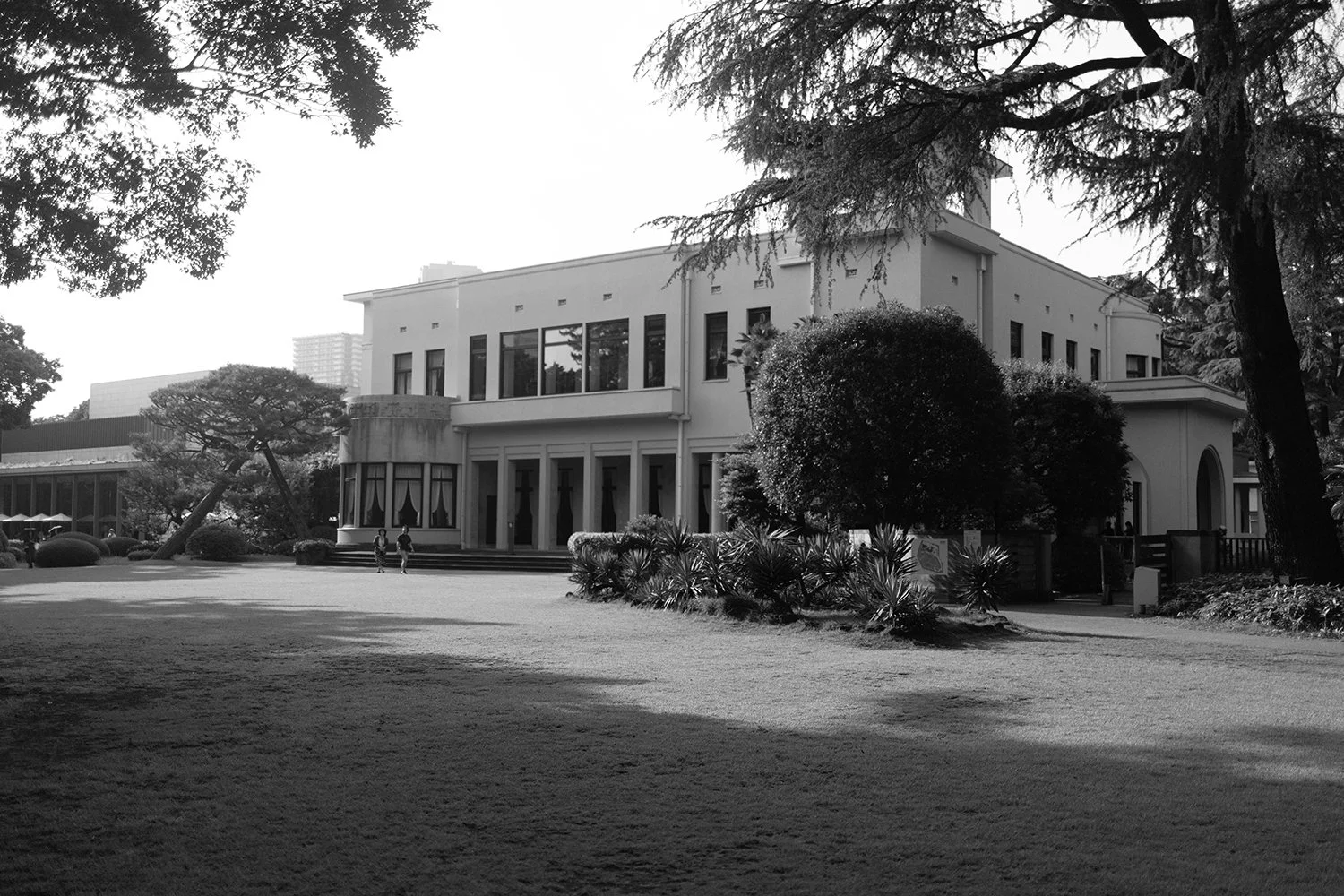
Location: Tokyo Metropolitan Teien Art Museum, Tokyo, Japan, Year: 2025, Photographer: Ajani Charles
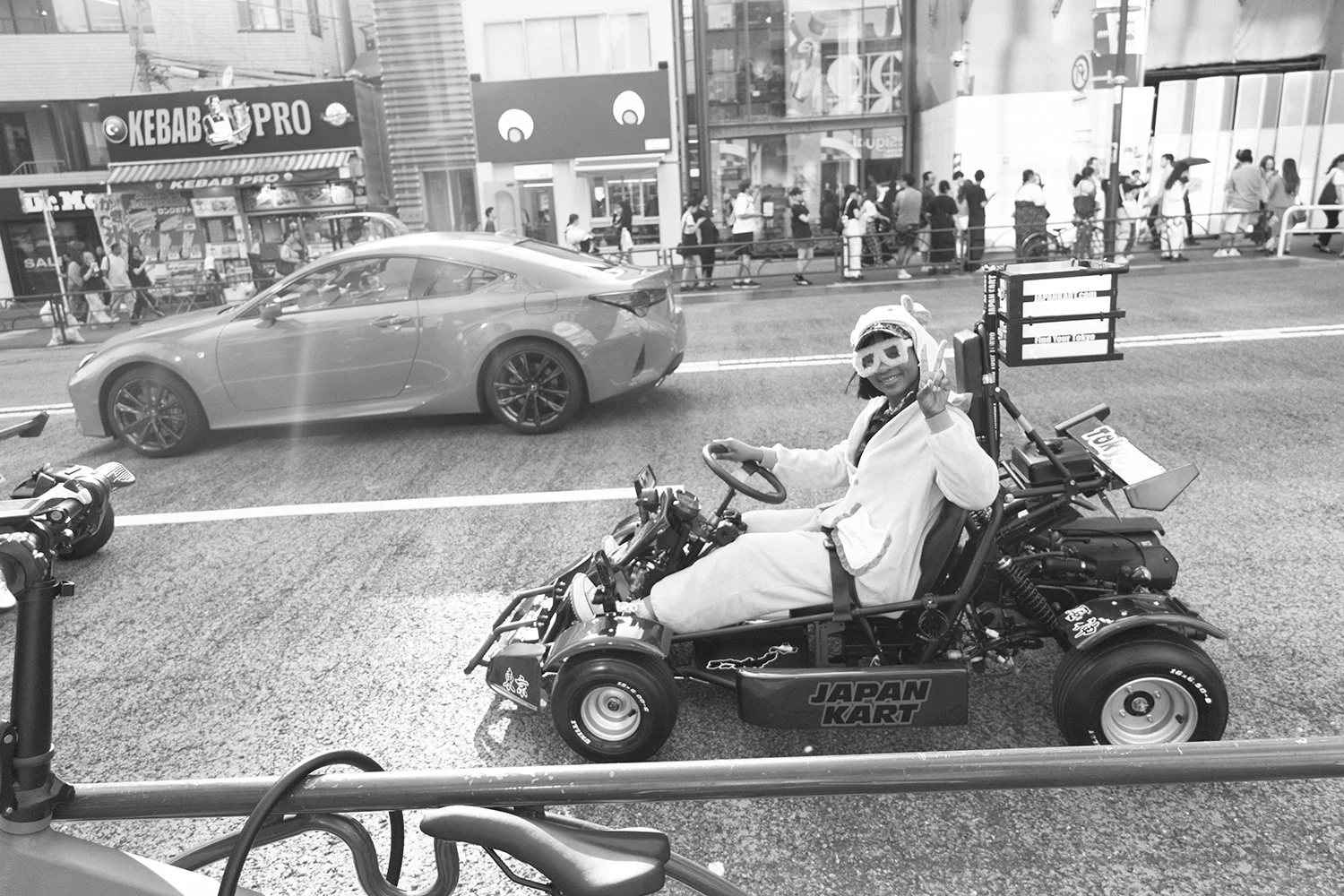
Location: Tokyo, Japan, Year: 2025, Photographer: Ajani Charles

DJ: Yen, DJ: Yuto Yamanashi professionally known as MGL, Location: Akasaka, Tokyo, Japan, Year: 2025, Photographer: Ajani Charles

Location: Shibuya Crossing, Tokyo, Japan, Year: 2025, Photographer: Ajani Charles

Location: Osaka, Tokyo, Japan, Year: 2025, Photographer: Ajani Charles

Location: The National Art Center, Tokyo, Japan, Year: 2025, Photographer: Ajani Charles

Entrepreneur, Recording Artist, Dancer, Choreographer: Cornbread, Location: Miyashita Park, Tokyo, Japan, Year: 2025, Photographer: Ajani Charles

Location: TWO FACE, Tokyo, Japan, Year: 2025, Photographer: Ajani Charles
